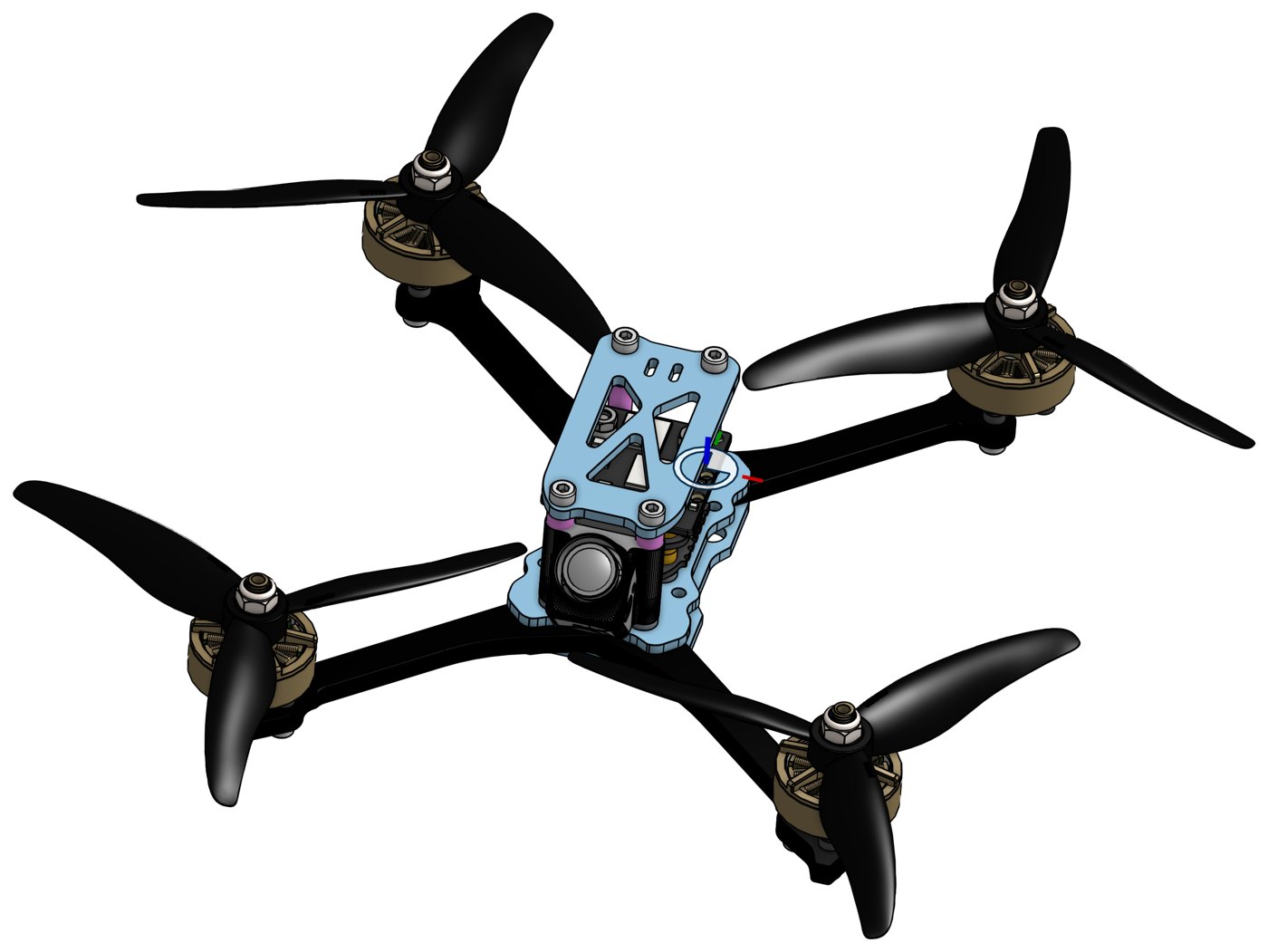
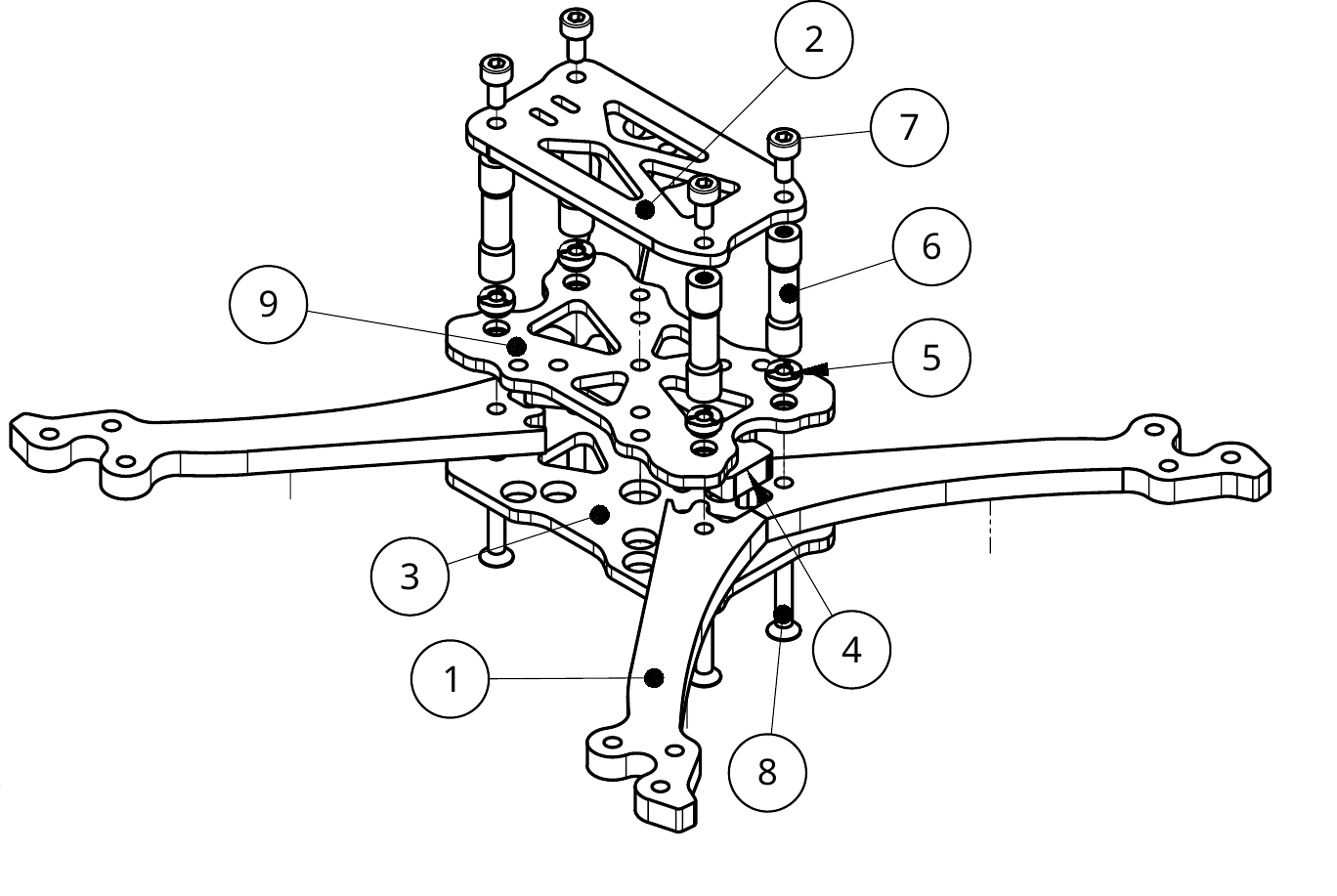
In development
PID and filter tuning tool
Tal is developing a PID and filter tuning tool that works from Betaflight blackbox logs. It brings together his own tuning experience, what he has learned from other pilots, and a great deal of help from AI. The tool is now in its development and optimisation phase.
PID and filters, explained simply
A short guide to what PID and filter tuning are, why they matter, and how Tal's tool helps.
The drone balances itself thousands of times a second
A racing drone can't fly straight on its own. Think of balancing a broom upright on your hand: you watch it all the time and move your hand a little whenever it starts to lean. The flight controller does the same thing. A motion sensor called the gyro tells it how the drone is moving, and the flight controller speeds each motor up or slows it down to keep the drone doing exactly what the pilot asks. It repeats this thousands of times every second.
What "PID" means
PID is the recipe the flight controller uses to decide how hard to correct. It has three ingredients. Imagine driving a car and stopping exactly at a line:
PPushHow hard to react to the error right now. Far from the line, you press harder.
IStay on targetFixes a small error that won't go away on its own, like a steady wind slowly pushing the drone off its line.
DBrakeEases off before you arrive, so you stop on the line instead of shooting past it and bouncing back.
"Tuning" means finding the right amount of each ingredient for one particular drone.
Why tuning matters
Every drone is different: its weight, motors, propellers and frame all change how it behaves. With the wrong settings it either feels soft and lazy, drifting and slow to react, or it overreacts and wobbles, shakes and makes the motors hot. A well-tuned drone feels locked in: it goes exactly where you point it and stops exactly where you want. In racing, that is the difference between hitting a gate and flying cleanly through it.
Noise, and why filters are needed
The spinning motors and propellers make the whole drone vibrate. The gyro feels these vibrations, a bit like a microphone placed next to a loudspeaker picking up a loud hum along with your voice. If the flight controller reacts to that hum, it fights vibrations that aren't real movement, and the motors twitch and heat up.
Filters clean up the signal, like noise-cancelling headphones. But every filter adds a tiny delay, so the drone reacts a little later. Too little filtering lets noise through; too much makes the drone feel slow. The goal is just enough filtering, and no more.
Why it is hard to get right
Traditionally, tuning means trial and error: change a number, fly, try to feel the difference, and repeat, again and again. Reading the flight recordings needs experience, and a wrong step can overheat or even burn a motor. That is why many pilots never tune their drones at all.
How the TalPer tuning tool helps
Betaflight, the software on the drone, can record every flight in detail, much like the black box on an airliner. Tal's tool reads that recording and does the hard part:
- It measures how closely the drone followed the pilot's sticks, so it can tell whether the drone was too soft or overreacting.
- It measures how much vibration the gyro felt at every throttle level, and where that noise comes from.
- It suggests the next small, safe change to the PID settings, and the lightest filter settings that still keep the noise out.
- The pilot flies again with the new settings, and a new recording shows whether it worked.
The tool turns guesswork into small, measured steps. It brings together Tal's own experience, what he has learned from other pilots, and a great deal of help from AI. Tuning still needs an experienced pilot to judge each step, which is why the tool is for Tal's own use and a few selected partners.
Screenshots from the tool's built-in demo log, a simulated 60-second flight of a 5" quad.
These are screenshots of the tool working on a demo log. The tool is not public and is not available to download or use online. For tuning help, see Partnerships.